
How To Maximize The Fertility of Your Boars and Sows
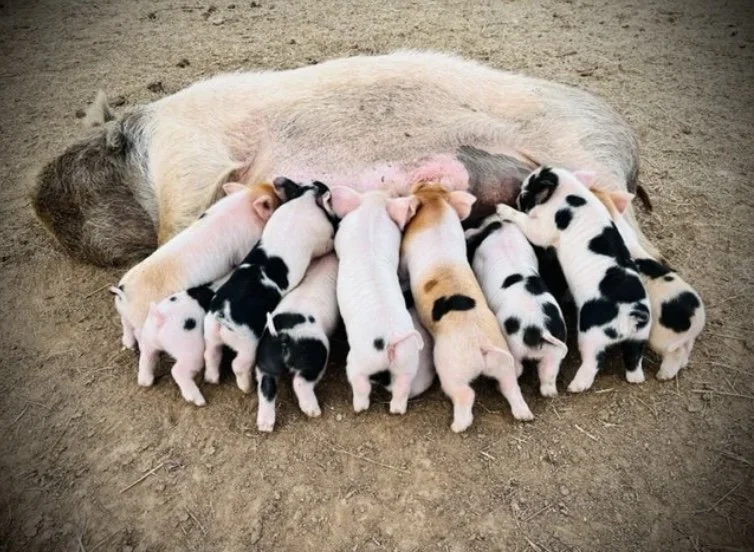
By Melissa Knox
Kunekunes tend to be very fertile creatures, but there are a few things that you should be aware of that can have a major impact on whether they are going to produce piglets for you or not. Full disclosure; I’m not a veterinarian, but I do have years of experience in this area. The information in this article is based on my experiences and things that have worked for me.
GIRLS:
Sow- Mature female who has had a litter
Gilt- Immature female who has not had a litter
BOYS:
Boar- Mature intact male
Boarling- Immature intact male
Barrow- Castrated male
First of all, beginning to breed in the correct age window is very important. A gilt should be around 180 pounds or more and at least one year of age before her first breeding. She needs to be large enough to handle the weight of the boar and have enough abdominal room to carry a healthy litter of piglets to term. Also, if she does not have a healthy body condition (underweight) her body may be reluctant to settle with a litter because it is putting its energy into supporting her health. If you wait too much past two years of age, you risk her developing fat in her ovaries which could start to decrease her fertility. Boars can breed a sow whenever they can reach and are interested in doing it, this is usually between 8-14 months. I’ve noticed that if they can watch an adult boar at work, they are much more likely to be interested and have success on the earlier side of that range. I like to raise a young boar in with a mature boar. Older boars are not threatened by a younger boar and get along great. Boars also need to be at a healthy weight. Also, don’t put a large aggressive sow with a young boar, they can scare them and cause them to lose interest in breeding.
Second, a sow’s fertility can decline if she goes too long between breedings. People have widely different views surrounding how much time a sow needs between litters, and there are sound arguments for every position. Many production farms breed twice a year, and put the sow in with the boar immediately after weaning. Arguments for this include that the sow is happiest with piglets and that she doesn’t have enough time to develop fat in her ovaries which will keep her fertile. Arguments against such frequent breedings include that her uterus is being overworked and that the stress of constant pregnancy is unhealthy for her. I agree with both, but would definitely agree that waiting too long between pregnancies (one year or longer) will decrease fertility. In my opinion, 8-10 months between litters is ideal, however, this is a little tricky if you are trying to farrow in good weather months. What we try to do at the K5 Farm is farrow early spring, mid fall one year and farrow in summer the next.
Things that may help increase fertility include: feed sows extra when you are trying to breed her, consider Farrowsure if you are having fertility issues with multiple animals, make sure that your breeding stock is on a regular deworming program (at least twice a year, once including Ivermectin). Another thing to consider is that occasionally a sow and boar are just not compatible even though individually they are both fertile, and that animals can “friend zone” each other if they are raised together. Also, if a young boar has not been raised with older boars to “watch”, he might take some time (six months or longer) to “figure things out”.
Raising a litter of Kunekunes is a rich and rewarding experience that I hope everyone gets to enjoy. Hopefully some of this advice will help you if you’ve experienced any troubles getting your ladies to settle. Best of wishes and good luck!!!